
SOLETAQUA: New floating solar technologies to boost sustainability in agro-industrial settings
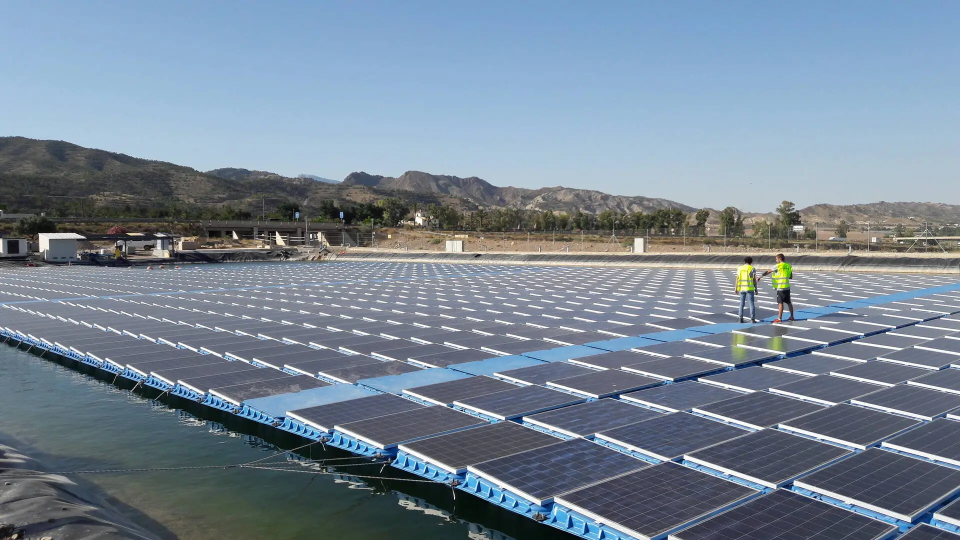
Objective: Efficient, sustainable and cost-effective development of floating solar photovoltaic power plants (FSPVP) adapted to rural water bodies.
IHCantabria leads the SOLETAQUA project, a pioneering initiative to develop advanced floating solar power plants to boost the energy transition of the agro-industrial sector in Spain.
The project “Development of new floating solar technologies for agro-industrial and livestock environments” (SOLETAQUA), addresses one of the great current challenges in the field of renewable energies: the efficient, sustainable and profitable development of floating solar photovoltaic plants (FSPVP) adapted to rural bodies of water.
The consortium in charge of developing the SOLETAQUA project is integrated by ISIGENERE ─as coordinator─, the Environmental Hydraulics Institute of the Universidad de Cantabria (IHCantabria), the Laboratory of Materials Science and Engineering Division(LADICIM) and the University of Jaén. Its execution is financed by the Ministry of Science, Innovation and Universities (PLEC2022-009418 – MCIN/AEI/10.13039/501100011033) and the European Union, through the Next GenerationEU/PRTR funds.
The main objective of this project is to design an integrated methodology for the development of floating solar power plants, considering both their energy performance and their dynamic interaction with the aquatic environment and the durability of their materials over time.
Relevance of the SOLETAQUA project
SOLETAQUA was born as a response to the growing need for new solutions for renewable energy generation in rural areas, where the availability of land limits the installation of traditional terrestrial photovoltaics and where the presence of infrastructures such as irrigation ponds, reservoirs or industrial ponds opens new opportunities for the deployment of floating solar energy. These solutions not only avoid the use of agricultural land, but also reduce thermal losses thanks to the cooling effect of water.
IHCantabria is coordinating the development of advanced numerical models to predict the hydrodynamic and structural behavior of FSPVP in variable environmental conditions. These tools will allow optimizing the design of floats and anchoring systems, facing challenges such as the impact of waves, or the thermal transfer between the plant and the water. For this purpose, this institute made available to the SOLETAQUA project its supercomputing capacity and its first class and highly unique experimental facilities. The tests are being carried out in the Cantabria Large Marine Engineering Tank (CCOB), one of the few tanks in the world in which the action of multidirectional waves, omnidirectional currents and wind, frequent conditions in the transport process and, above all, caisson anchoring can be simulated simultaneously. The CCOB is a unique scientific-technological infrastructure (ICTS).
One of the pillars of the SOLETAQUA project is the development of high-performance ecological materials, led by LADICIM, a group specialized in materials science. Through experimentation with new resins, such as cork composites, the aim is to replace the use of conventional polyethylene (HDPE) with more sustainable solutions, without compromising the durability and structural strength of floating installations.
The University of Jaén also contributes to this project with the development of field tests in five real sites, in order to empirically validate the designs and evaluate their energy and environmental performance, including the reduction of thermal losses and evaporation mitigation in arid areas.
With this multidisciplinary approach – integrating offshore engineering, hydrodynamics, materials science and solar photovoltaics – SOLETAQUA’s ultimate goal is to facilitate the mass adoption of floating solar technologies in the Spanish agro-industrial sector. This will contribute to reducing greenhouse gas emissions; in addition to avoiding water losses, generating qualified employment and consolidating a national value chain around environmentally friendly energy solutions.
The execution of this project will provide an answer to key technological barriers ─such as the lack of coupled numerical models, the need for new sustainable materials, and the optimization of fluid-structure interaction─, which consolidates IHCantabria as a leading institution in research applied to floating renewable energies. The SOLETAQUA project will also reinforce the positioning of ISIGENERE as a pioneering company in floating solar technology, and will project at international level the knowledge developed by LADICIM and the University of Jaén in a strategic sector for the energy transition.
More information about the SOLETAQUA project, through the following web page: https://soletaqua.ihcantabria.com/
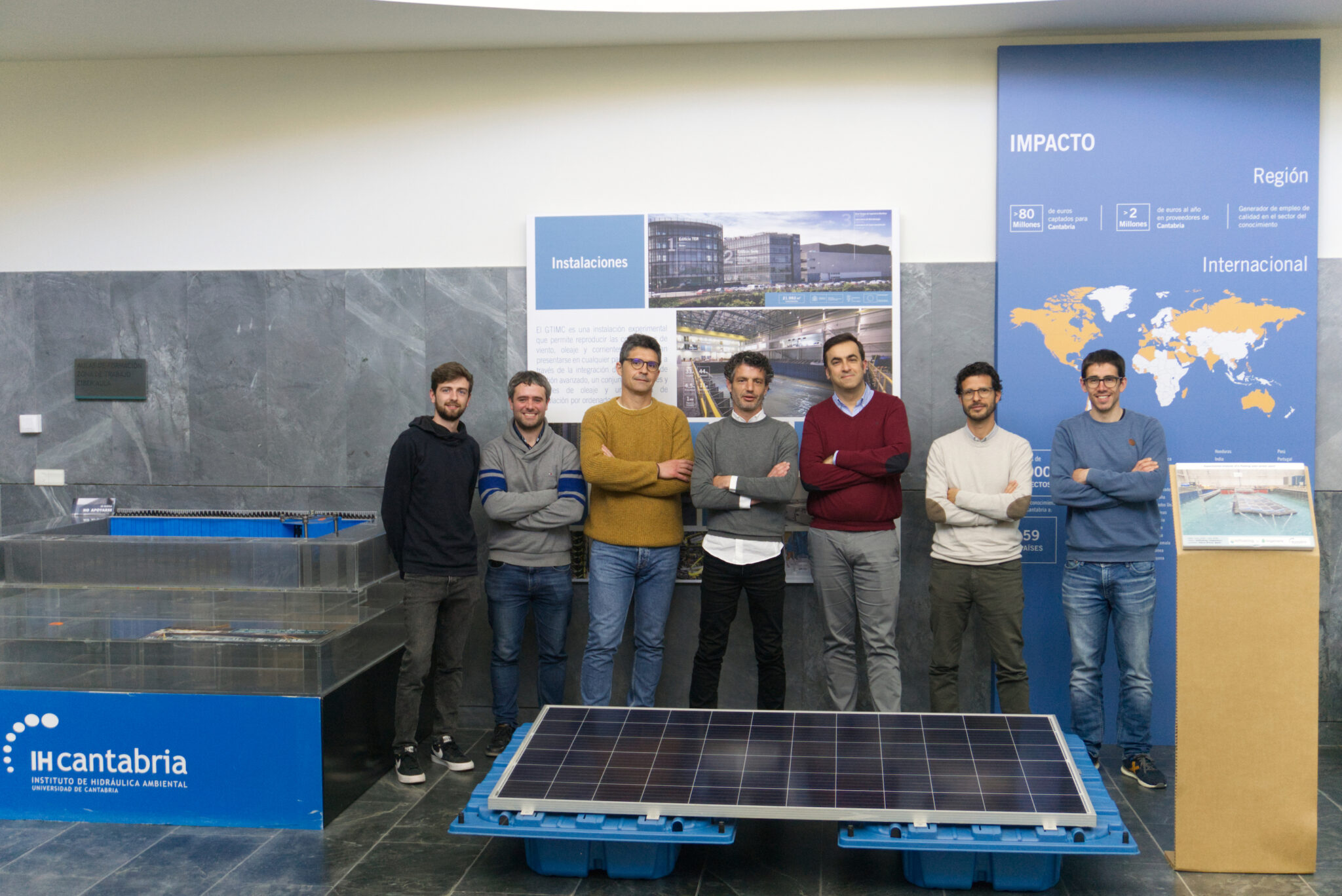
SOLETAQUA’s multidisciplinary team integrates offshore engineering, hydrodynamics, materials science and photovoltaic solar energy.