NEWS

A new IHCantabria study for the Port of Santander concludes that the Bay has reached a “dynamic equilibrium”.
NEWS The most current data certifies that erosion rates on the beaches of Somo and Loredo and the advance of El Puntal have been significantly reduced since the dredging and dumping management policy began to be designed on the basis of scientific knowledge. The Mesa...

IHCantabria launches FLOCOP DSS, an intelligent tool to support offshore wind farm deployment
This project offers to strengthen governance and analyze the impact of Interreg projects in 5 thematic areas: environmental conservation, climate change adaptation and risk management, marine energy, ocean pollution and sustainable tourism.

IHCantabria presents an open discussion on its history, work, and evolution at the Ateneo de Santander
IHCantabria presents an open discussion on its history, work, and evolution at the Ateneo de Santander

IHCantabria renews its continuing education offer through UC Microcredentials
The results of this project propose a pioneering procedure for adaptation to climate change in coastal areas, integrating nature-based and hybrid solutions.

IHCantabria leads the National Climate Risk Assessment, a scientific reference for Climate Change Adaptation in Spain.
The Environmental Hydraulics Institute of la Universidad de Cantabria (IHCantabria) has led the scientific consortium integrated by IHCantabria, Tecnalia Research & Innovation and the Basque Centre for Climate Change (BC3), which has acted as technical and scientific assistance for the elaboration of the Assessment of Risks and Impacts derived from Climate Change in Spain (ERICC-2025).

IHCantabria participates in the launch of the BLUESHORES project, which promotes the adoption of hybrid solutions to protect urban coastal areas.
This project offers to strengthen governance and analyze the impact of Interreg projects in 5 thematic areas: environmental conservation, climate change adaptation and risk management, marine energy, ocean pollution and sustainable tourism.

IHCantabria organizes the 3rd meeting of the SEADITO project “Transformation of coastal ecosystems in the face of climate change”.
NEWS Third meeting of SEADITO project partners in IHCantabriaThe interactions between humans and the marine environment and the environmental and social factors that influence its evolution, have been the focus of the third meeting of the consortium of the European...

IHCantabria and Mondragon University reinforce their commitment to innovation and join forces to promote innovation in marine energy
The tests will be carried out on a 1:13 scale replica, in the channel of the ETS de Caminos, Canales y Puertos of the University of Cantabria. They will allow to validate the BUFOWC digital twin and to consolidate a testing methodology for wave devices endorsed by third parties.
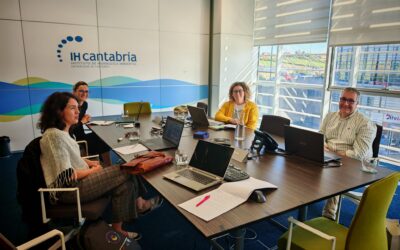
Training sessions and international collaboration at IHCantabria during the visit of the coordinators of the European project SONATA
This project offers to strengthen governance and analyze the impact of Interreg projects in 5 thematic areas: environmental conservation, climate change adaptation and risk management, marine energy, ocean pollution and sustainable tourism.
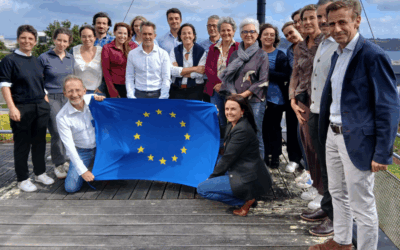
IHCantabria will contribute to the design of policies and future strategic plans of the Interreg Atlantic program, through the European GRAAL project
This project offers to strengthen governance and analyze the impact of Interreg projects in 5 thematic areas: environmental conservation, climate change adaptation and risk management, marine energy, ocean pollution and sustainable tourism.
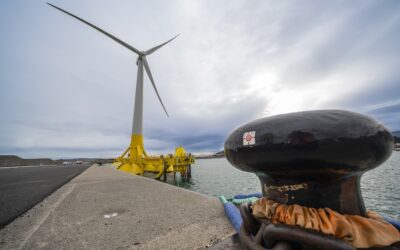
IHCantabria will lead two thematic blocks on innovation in marine energy and ports, in the Technical Conference on ‘Offshore wind, hydrogen and ports’
The thematic blocks organized by IHCantabria will address advanced solutions for port adaptation to marine renewable energies and innovation in marine energies through MAR+.
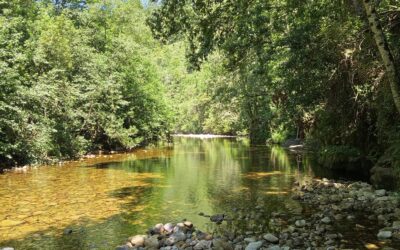
IHCantabria culminates the Cop.RIVER project on monitoring fluvial landscapes with remote sensing
The development of this project has made it possible to identify key indicators to evaluate the conservation of rivers and riparian forests with tools from the European COPERNICUS program.