The Government commissions IHCantabria with a plan for 2026 to mitigate the impact of climate change on the Cantabrian coast.
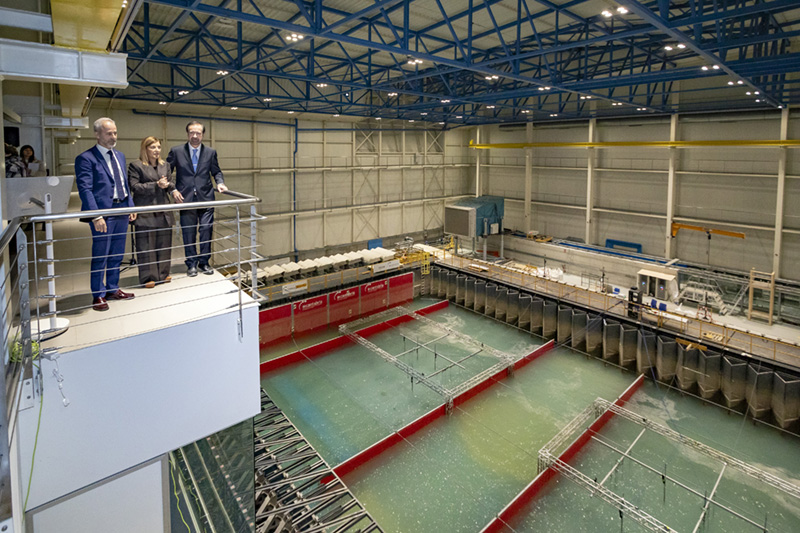
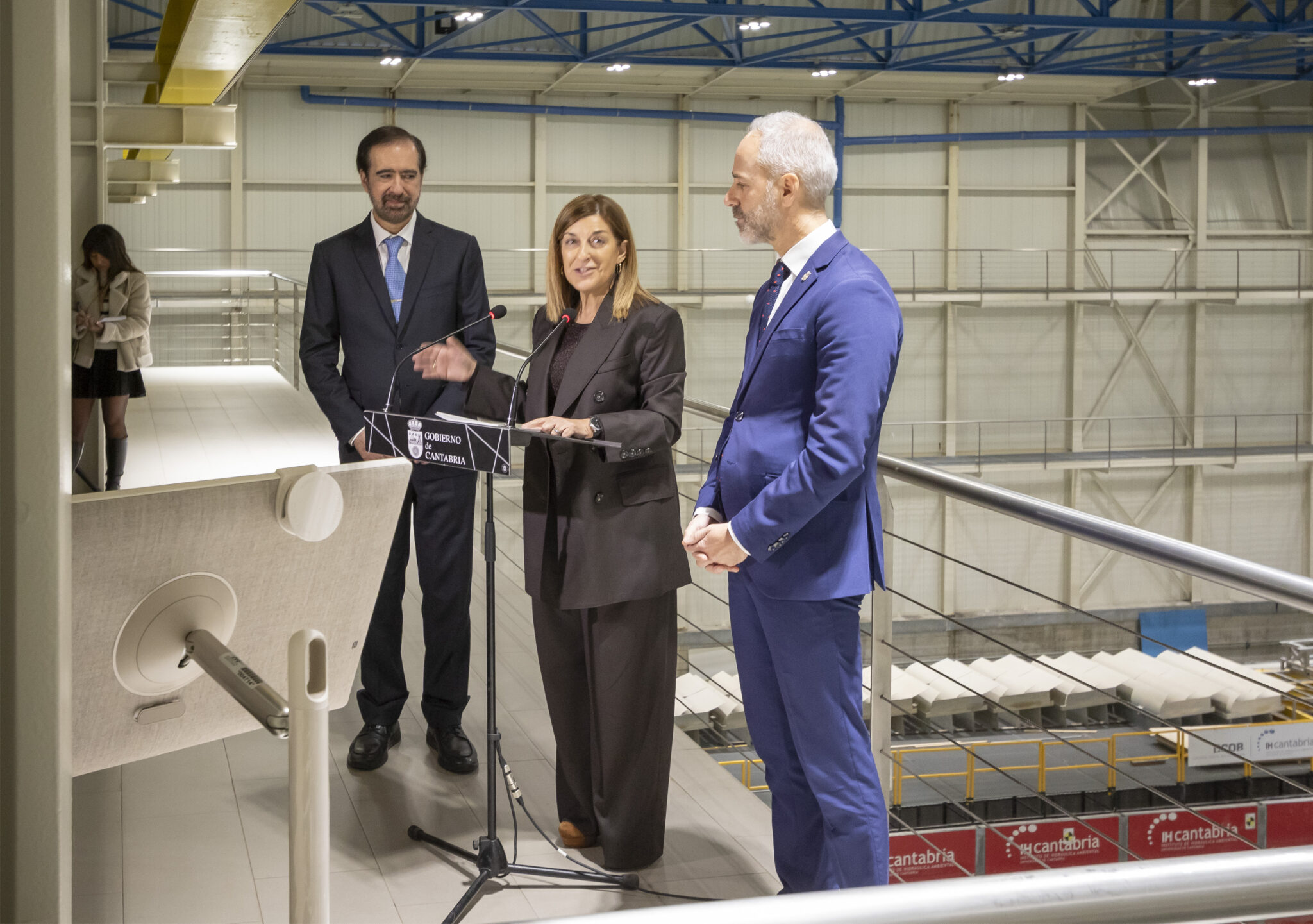
The Minister of Education, Sergio Silva; the President of Cantabria, Maria José Sáenz de Buruaga, and the General Director of IHCantabria, Raúl Medina during the visit to the Cantabria Coastal and Ocean Basin (CCOB). PHOTO: José Cavia
María José Sáenz de Buruaga reaffirms the commitment “already underway” with the Institute of Environmental Hydraulics of the University of Cantabria (IHCantabria), and foresees an “unfathomable future” for this research center.
The President of Cantabria, María José Sáenz de Buruaga, today reaffirmed the commitment “already in place” of her Executive with the Environmental Hydraulics Institute of the Universidad de Cantabria (IHCantabria), “flagship of knowledge in key scientific areas worldwide”, and a key element in the economic model based on knowledge for which the Executive is committed.
“Here science is manufactured. Science and technology made in Cantabria that is exported all over the world”, emphasized the president, who also foresaw “an unfathomable future” for this center, which in its 18 years of existence has reached 75 countries around the world with 1,600 research projects in areas related to engineering, water, environment and sustainability.
This evolution, from 50 to 220 “highly qualified” professionals, has been made possible, according to Buruaga, “by university talent, the excellence of a team with strategic vision and leadership, and a management model that works and connects them with society, with companies and also with the needs of the administrations”.
In fact, the Government has commissioned IHCantabria to prepare an Adaptation Plan for the Cantabrian Coast by 2026 with the aim of reducing the consequences of rising sea levels.
For the head of the Executive, IHCantabria represents what Cantabria wants to be, “a region with impact that achieves important achievements because it is truly committed to science and innovation”.
“Cantabria is thirsty for modernity and future and knows that the essential capital is knowledge,” said the president, who has committed to generate from the Government “an ideal environment for attracting investment and talent, provide more resources for research and strengthen ties with the University”.
A commitment of the Executive that “is already underway” with measures such as the increase in the R+D+i budget, which has doubled from 38 to 80 million euros, compliance with the Law of Science, the implementation of the First Digital Agenda of Cantabria, with an investment of 400 million euros, “key to promoting the digital transformation of the productive fabric and public services” and “generating the conditions with a dynamic business ecosystem and a strong institutional commitment”.
According to the president, this policy of supporting innovation is already producing results, as evidenced by the occupation of the Xtela Tower with high-tech companies, the 10-place rise in the European innovation ranking and the positioning of Cantabria as the second autonomous region that has improved its performance the most since 2023.
He also recalled the prospect of several “tractor projects with a high transformational impact” such as the Health Innovation Park, the Altamira Project and the new IT and Telecommunications ICT center of the University “that will underpin this regional development strategy”.
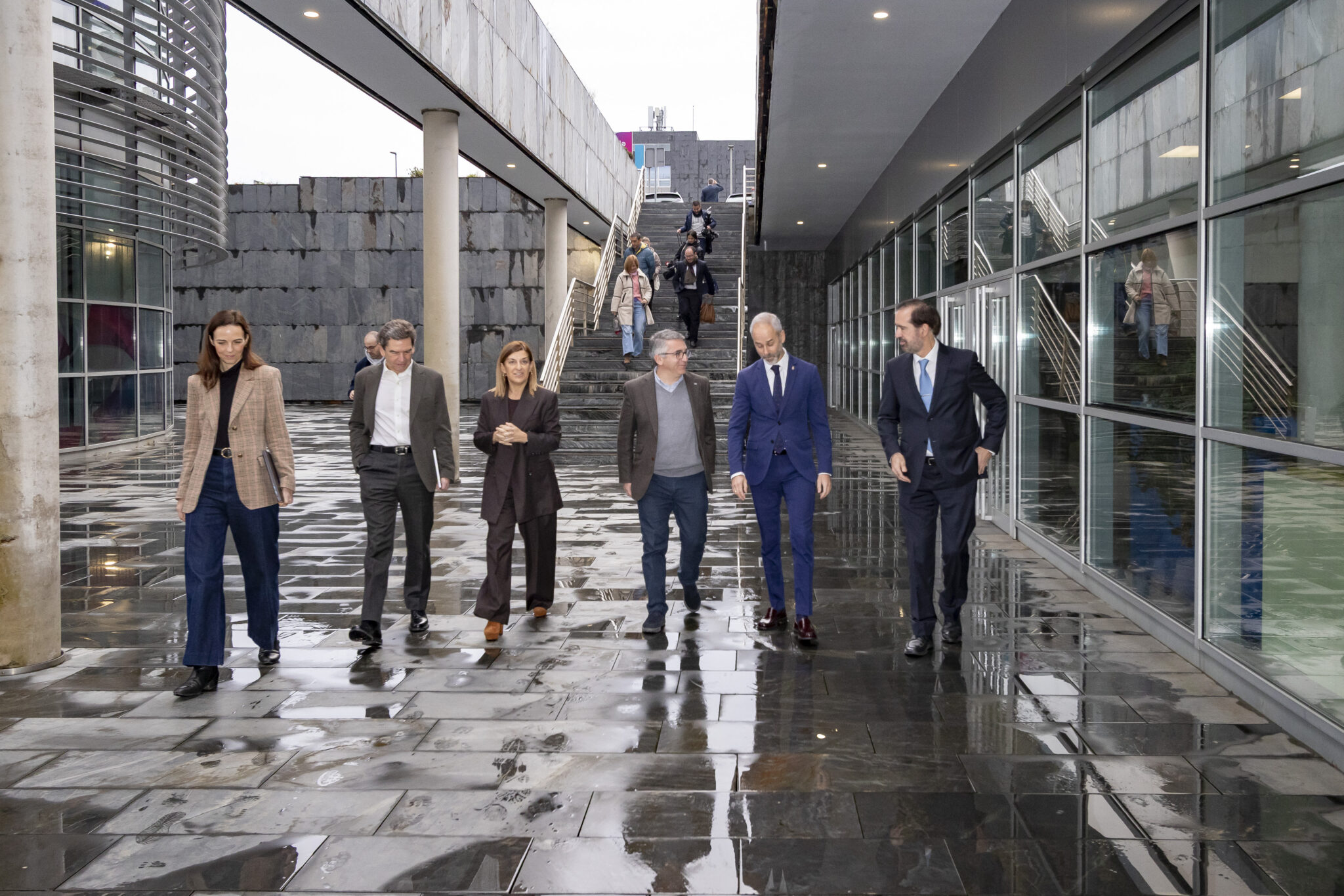
During her visit to IHCantabria and the Great Tank of Maritime Engineering of Cantabria (CCOB), the President was accompanied by the Minister of Education, Sergio Silva; the director of the Environmental Hydraulics Institute of the Universidad de Cantabria (IHCantabria), Raúl Medina; the director of Research of IHCantabria, Íñigo Losada, and the vice-rector of Research of the Universidad de Cantabria, Luigi Dell’Olio, with whom she also held a previous meeting to analyze the lines of work of the center.
In total, each year they carry out around 130 to 150 projects in about 30 countries and have a total budget of 12 million euros, 2 of which are provided by the Government of Cantabria.
“Our future is to grow. We have many water-related problems to solve, such as droughts, floods, droughts, etc.,” explained Medina, who acknowledged that his goal is to “generate science so that managers can make decisions with as much information as possible” and that his aim is to “continue working for and for Cantabria”.