IHCantabria shares its project management model with the BioSense research institute in Serbia
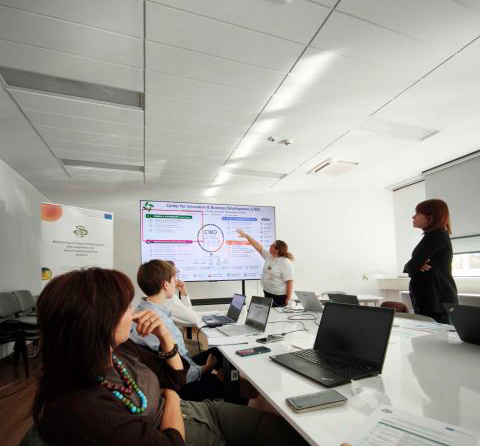
The IHCantabria team presents its organizational model in Serbia
A practical approach to research management based on specialized teams, digital tools, and processes that facilitate the development of international R&D&I projects
As part of the European SONATA project (Monitoring of Nature Infrastructure – Skill Acquisition for Nature-based Solutions), funded by the Horizon Europe program, the Environmental Hydraulics Institute of the Universidad de Cantabria (IHCantabria) held a training workshop on the management of research and innovation projects at the BioSense Institute in Novi Sad, Serbia.
The training session brought together researchers, project managers, and administrative staff from BioSense, with the goal of sharing knowledge and exploring ways to strengthen their participation in European and international projects.
The IHCantabria team presented the methodologies, procedures, and tools it has developed through years of experience in coordinating and managing R&D&I projects. During the sessions, they addressed key issues such as the internal organization of research institutions, the coordination of multidisciplinary teams, and the comprehensive management of the project life cycle —from identifying funding opportunities and preparing proposals to project implementation and monitoring.
The event sparked considerable interest among BioSense participants, who asked numerous questions about how IHCantabria’s organizational model works, its coordination mechanisms, and the solutions developed to meet the needs of research teams. IHCantabria shared its experience in business development and knowledge transfer, emphasizing how important it is to bring research results to society and promote their practical application in order to generate greater economic, social, and environmental impact.
Beyond the technical content, the workshop became a forum for dialogue and mutual learning. Participants shared their respective organizational models and analyzed the main challenges associated with managing European projects, identifying potential improvements in work procedures, interdepartmental coordination, and the use of management tools.
This activity is part of the capacity-building work package of the SONATA project, led by IHCantabria, which aims to enhance BioSense’s participation in European programs and strengthen its capacity to coordinate new international research and innovation initiatives.
Through this collaboration, IHCantabria continues to promote international scientific cooperation and knowledge transfer, helping other institutions strengthen their capacity to carry out research projects with greater impact and scope.


This project is funded by the European Union under Horizon Europe (Project SONATA GA 101159546)