IHCantabria promotes scientific and technical collaboration between Spain and Colombia
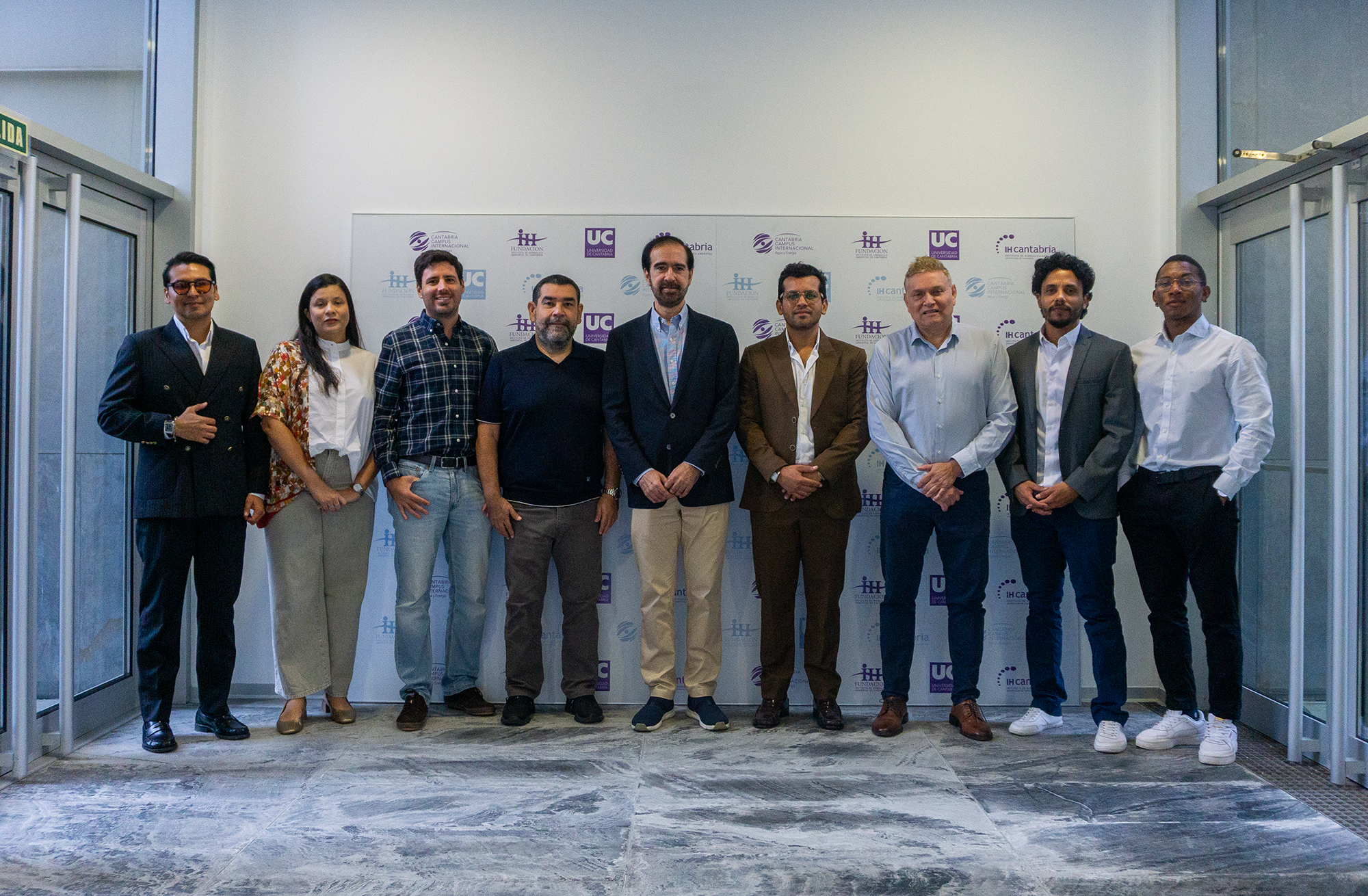
Visit by representatives from Cardique and the University of Magdalena to the IHCantabria facilities
A technical workshop focused on coastal management, climate change adaptation, and nature-based solutions to address the challenges facing Colombia’s Atlantic coastline
On October 2, the Environmental Hydraulics of the Universidad de Cantabria (IHCantabria) welcomed Javier Orozco Montaño, technical director of planning of the Regional Autonomous Corporation of the Canal del Dique (Cardique) in Bolívar (Colombia), as well as Gustavo Hernández Cortez and Angélica Rodríguez, researchers from the University of Magdalena.
The meeting provided an opportunity to strengthen the scientific and technical collaboration between the institutions, exchange experiences and methodologies, and explore new opportunities for joint work in areas such as integrated coastal zone management, climate change adaptation, coastal engineering, and nature-based solutions.
Cardique is the environmental authority responsible for the planning, management, and implementation of environmental plans, programs, and projects within its jurisdiction. Its work is focused on sustainable development with an ecosystem-based approach in three ecoregions of the department of Bolívar: Canal del Dique, Marino Costera–Cuenca Ciénaga de La Virgen, and Montes de María.
The event began with opening remarks by Raúl Medina Santamaría, the director general of IHCantabria, who presented the Institute’s main areas of research, technology transfer, and technological development. Next, Javier Orozco Montaño outlined Cardique’s areas of focus in environmental planning and management.
Following the institutional presentations, the delegation toured some of IHCantabria’s main scientific and technical facilities, including IHbio LAB, the supercomputing cluster, and the Large Marine Engineering Tank (CCOB). The visit to these facilities was part of the day’s technical program.
Exchange of experiences and skills
The second part of the day was devoted to technical discussions. Researchers and technologists from IHCantabria presented projects, methodologies, and case studies related to some of the major environmental and coastal challenges of common interest to Spain and Colombia.
Topics covered included Integrated Coastal Zone Management (ICZM), based on the experience of the Santander Bay Plan; the assessment of climate change impacts and the design of adaptation measures, using the case of Montijo, Panama; nature-based solutions; and the methodologies and tools developed for the analysis of estuaries, marshes, and subsea outfalls. In addition, IHData’s capabilities for the management, analysis, and utilization of environmental and marine information were presented.
During the event, special attention was given to the challenges posed by climate change along the Colombian Caribbean coast. In this context, IHCantabria presented the Colombian Atlantic Coast Modeling System (SMC) project and various examples of how these tools are applied in the Caribbean. Additionally, Mauricio González Rodríguez, head of IHCantabria’s Coastal Engineering and Management Group, addressed in his presentation “The Future of the Beaches Between Barranquilla and Cartagena in the Face of Climate Change and Major Socioeconomic Transformations,” he discussed coastal erosion processes and the challenges this stretch of the Colombian coastline will face due to the effects of climate change and anticipated transformations in the region.
The meeting concluded with a discussion of potential avenues and opportunities for collaboration, aimed at applying the scientific and technological expertise of the participating institutions to future projects related to coastal planning, climate adaptation, and the sustainable management of coastal ecosystems.