IHCantabria organizes the 3rd meeting of the SEADITO project “Transformation of coastal ecosystems in the face of climate change”.
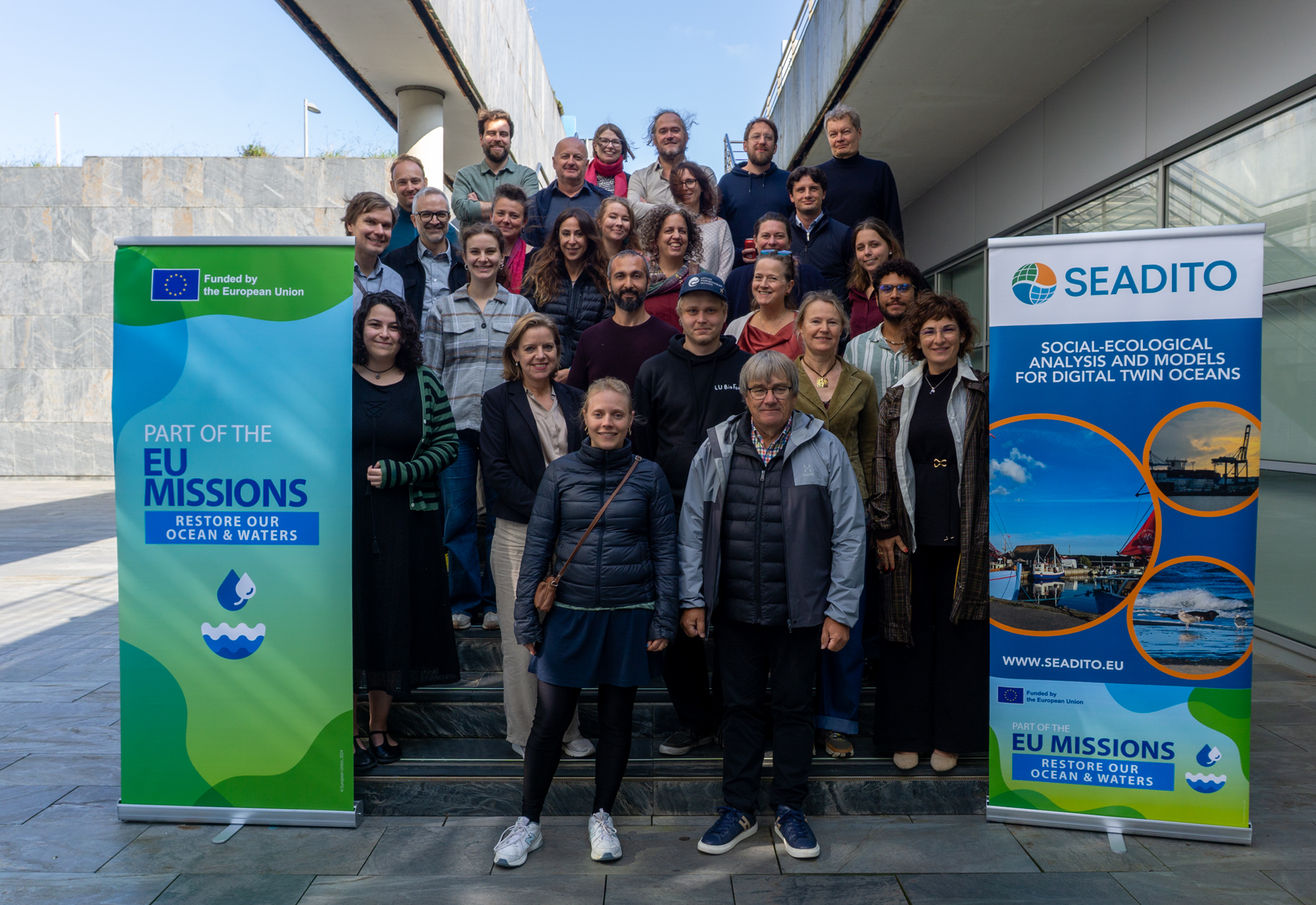
Third meeting of SEADITO project partners in IHCantabria
The interactions between humans and the marine environment and the environmental and social factors that influence its evolution, have been the focus of the third meeting of the consortium of the European project SEADITO, which has gathered this week in IHCantabria to thirty professionals.
This week between October 14 and 16, the Environmental Hydraulics Institute of Universidad de Cantabria (IHCantabria) hosted the third meeting of partners of the SEADITO project, a European initiative that develops a Digital Twin Ocean (DTO) with a socio-ecological and collaborative approach.
The meeting has been a key point in the evolution of the project, allowing to evaluate the progress achieved during the first year of work, and to coordinate the next phases towards the creation of integrated socio-ecological models within the European marine digital ecosystem.
These working meetings have had a mainly collaborative approach, with a hybrid format combining face-to-face and virtual sessions, with the participation of members connected from Finland, Greece and Norway.
During these three days of international collaboration, the SEADITO consortium worked mainly on advancing and updating data from the 7 case studies to test different frameworks, models and integrated socio-ecological indicators, and to assess the impacts and interactions of human activities with marine ecosystems. The results will allow a better understanding of the relationship between the natural environment and the well-being of coastal communities.
On the first day, the results of the participatory workshops with local stakeholders, the definition of the main challenges and the objectives of the scenarios that are currently being developed in: Saronikos Gulf (Greece),Greifswald Bay (Germany), Oslofjord (Norway),Barcelona Metropolitan Area (Spain), Archipelago Sea (Finland), Central Baltic Sea (Latvia), Pan-European Case.
The second day was devoted to practical workshops dedicated to the implementation of the case studies in an open platform, in line with the principles of Open Science. Also, advances in digital tools such as the SEADITO Explorer, and the “What-If” Scenario Toolkit, which incorporate narrative maps and extended reality environments to explore future scenarios of environmental and social change, have been shown.
In the framework of this project, IHCantabria has developed a pan-European index of socio-ecological vulnerability, which combines information on marine biodiversity and the socio-economic development of coastal communities. This study analyzes how climate change, marine infrastructure development, and other anthropogenic activities may affect ecosystems and the populations that depend on them. This tool supports maritime spatial planning and contributes to anticipating the environmental and social challenges facing coastal communities in Europe.
In addition to the scientific sessions, the event strengthened collaboration between partners, who were able to share experiences, methodologies and visions on the transformation of European coastal ecosystems in the face of climate change.
Participants visited IHCantabria’s facilities – including the Great Tank of Maritime Engineering of Cantabria – and took a guided tour of the Costa Quebrada Geopark, a living example of the interaction between coastal dynamics and environmental changes that SEADITO seeks to understand and anticipate.
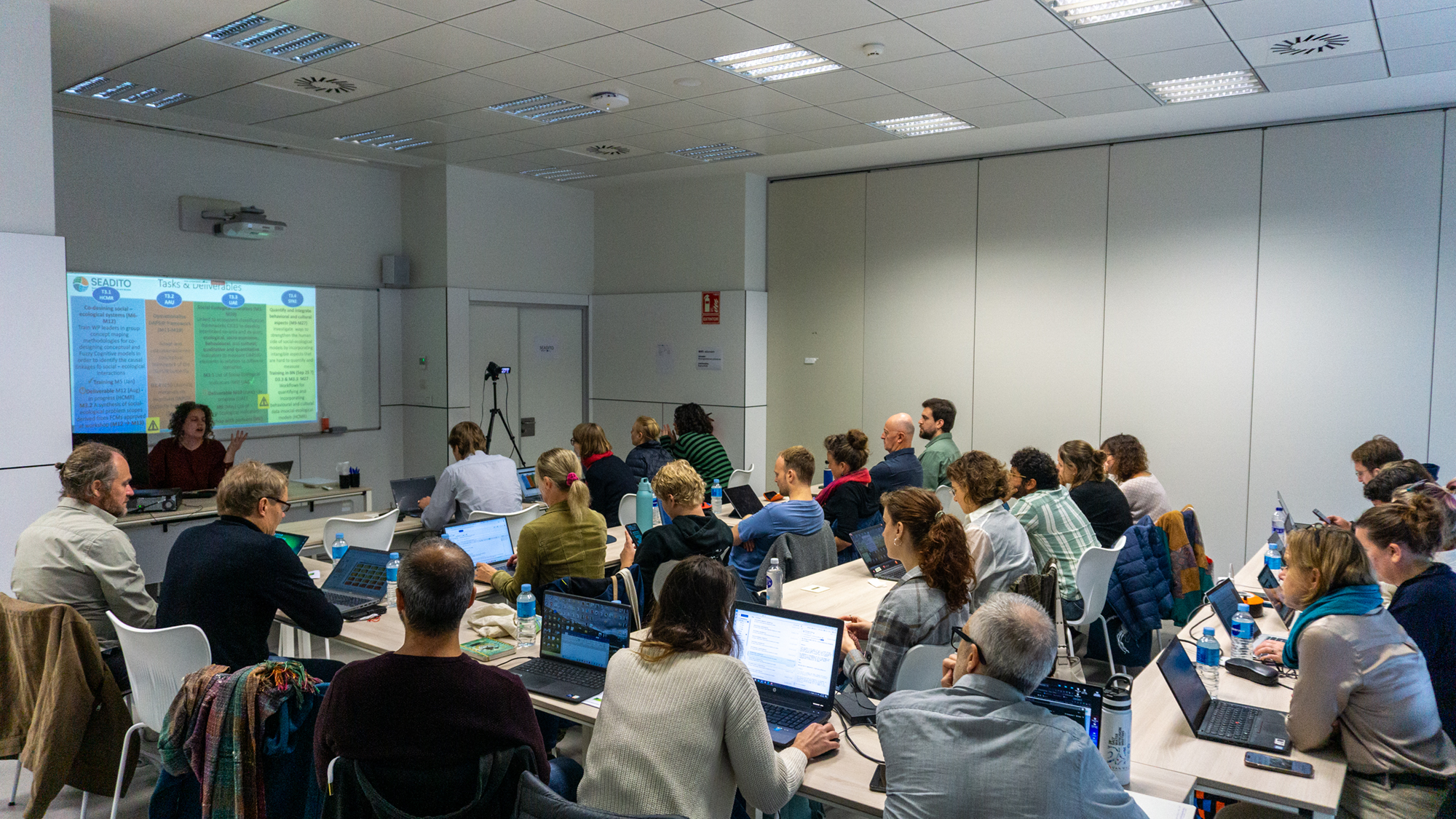
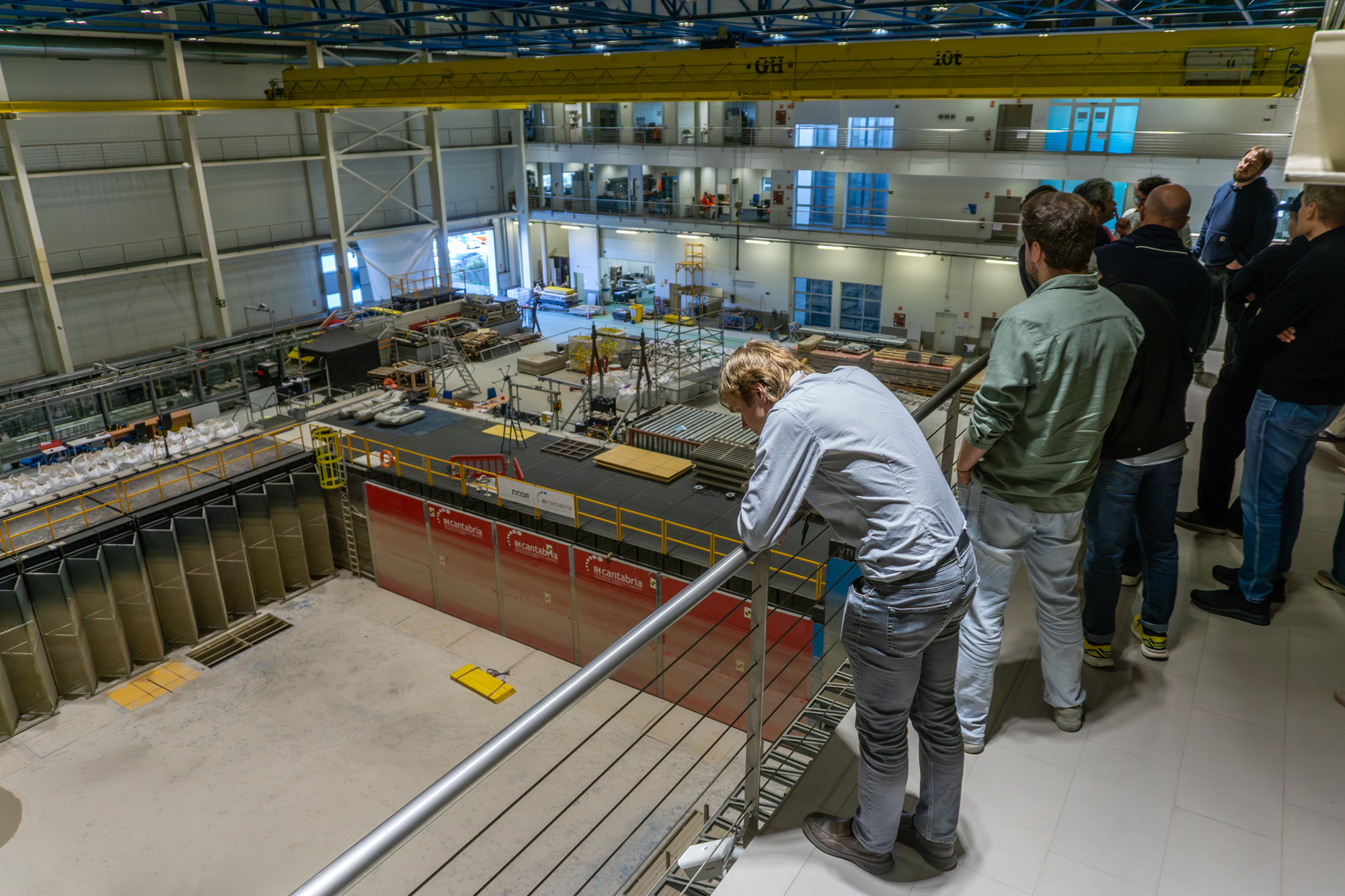
The participants in the SEADITO working day visited the IHCantabria facilities and the Great Tank of Maritime Engineering of Cantabria.


This project has received funding from the European Union’s Horizon Europe Programme under Grant Agreement No 101157243″