NEWS
IHCantabria summons Cantabria Regional Round Table to promote a coordinated response to Asian algae
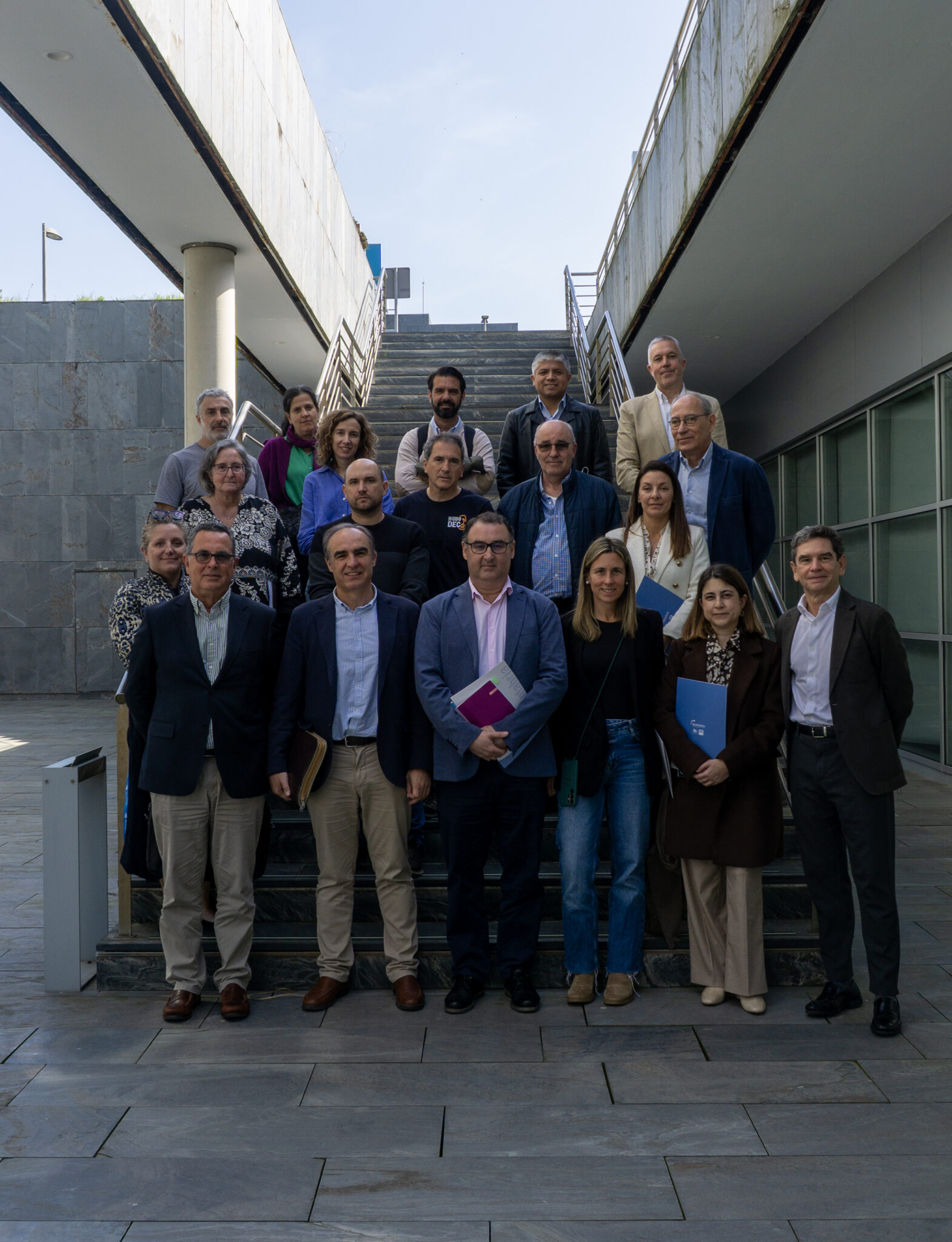
Public-private collaboration in the meeting of the Cantabria Regional Round Table against Asian algae at IHCantabria
This first meeting marks the formal start of a space for coordination and joint work of all key actors in Cantabria, with the aim of addressing this socioeconomic and environmental challenge in a structured and collaborative manner.
The Environmental Hydraulics Institute of the Universidad de Cantabria (IHCantabria) brings together at its headquarters representatives of public administrations, the productive sector and other agents for the constitution of the Regional Bureau to promote a coordinated response to the Asian algae.
In this constitutive session, the Regional Bureau addressed the identification of the real needs of the territory. On the part of the fishing sector, the Fishermen’s Association of Castro Urdiales explained the negative impact of the Asian algae on the extractive activity and fishing grounds. Likewise, the City Council of Noja explained the effect on tourism of the massive upwelling of algae that reached its beaches, and the high costs associated with its management.
The meeting also provided a context for the growing problem of Asian algae, an invasive species that is expanding rapidly along the Spanish coastline, with particular incidence on the Cantabrian coast. Its proliferation generates negative impacts on fishing, tourism and marine biodiversity, altering ecosystems and economic activities linked to the sea. Currently, there is no single, proven solution to halt its advance, which reinforces the need to explore innovative approaches based on scientific knowledge.
In this scenario, the constitution of the Regional Bureau of Cantabria acquires a special relevance as a space for the promotion of coordinated and innovative solutions, such as the development of pilot projects and a regional Living Lab. Actions that allow testing and validating technological, organizational or management solutions in real conditions, with the direct involvement of the actors of the territory. These initiatives will make it possible to move towards a shared roadmap. The session highlighted the importance of governance and inter-institutional coordination to meet a challenge of this complexity. The Regional Roundtable has a broad representation, which includes, in addition to the Noja City Council, the general directorates of Environment, Fisheries, Tourism and Innovation of the Government of Cantabria, as well as the biodiversity team of the Ministry for Ecological Transition and Demographic Challenge (MITECO). This multilevel composition allows addressing the challenge from an integral vision and reinforces the need to move towards a specific protocol for the management of Asian seaweed, similar to that of Andalusia.
The Regional Roundtable is supported by a strong scientific-technical participation, represented by IHCantabria, the Spanish Institute of Oceanography (IEO-CSIC), the Universidad de Cantabria and the Institute of Biotechnology and Biomedicine of Cantabria (IBBTEC), providing complementary capabilities in oceanography, biodiversity, biotechnology and environmental analysis. From the business sector, the Cofradía de Pescadores de Castro Urdiales and the Cantabrian startup Predictia, which provides specialized knowledge in AI and remote sensing applied to the marine environment, are participating.
Cantabria Regional Round Table will continue its work in the coming months, advancing in the definition of the roadmap, the preparation of pilot projects and the deployment of collaborative initiatives, which will be open to all the business fabric of Cantabria, through calls for the open innovation program and the regional Living Lab, with the aim of moving from diagnosis to action and strengthen the response capacity of the territory against Asian algae.

Cantabria Regional Round Table acquires special relevance as a space for the promotion of coordinated and innovative solutions