
CLIMPORT develops a pioneering tool for the design and construction of resilient port infrastructure
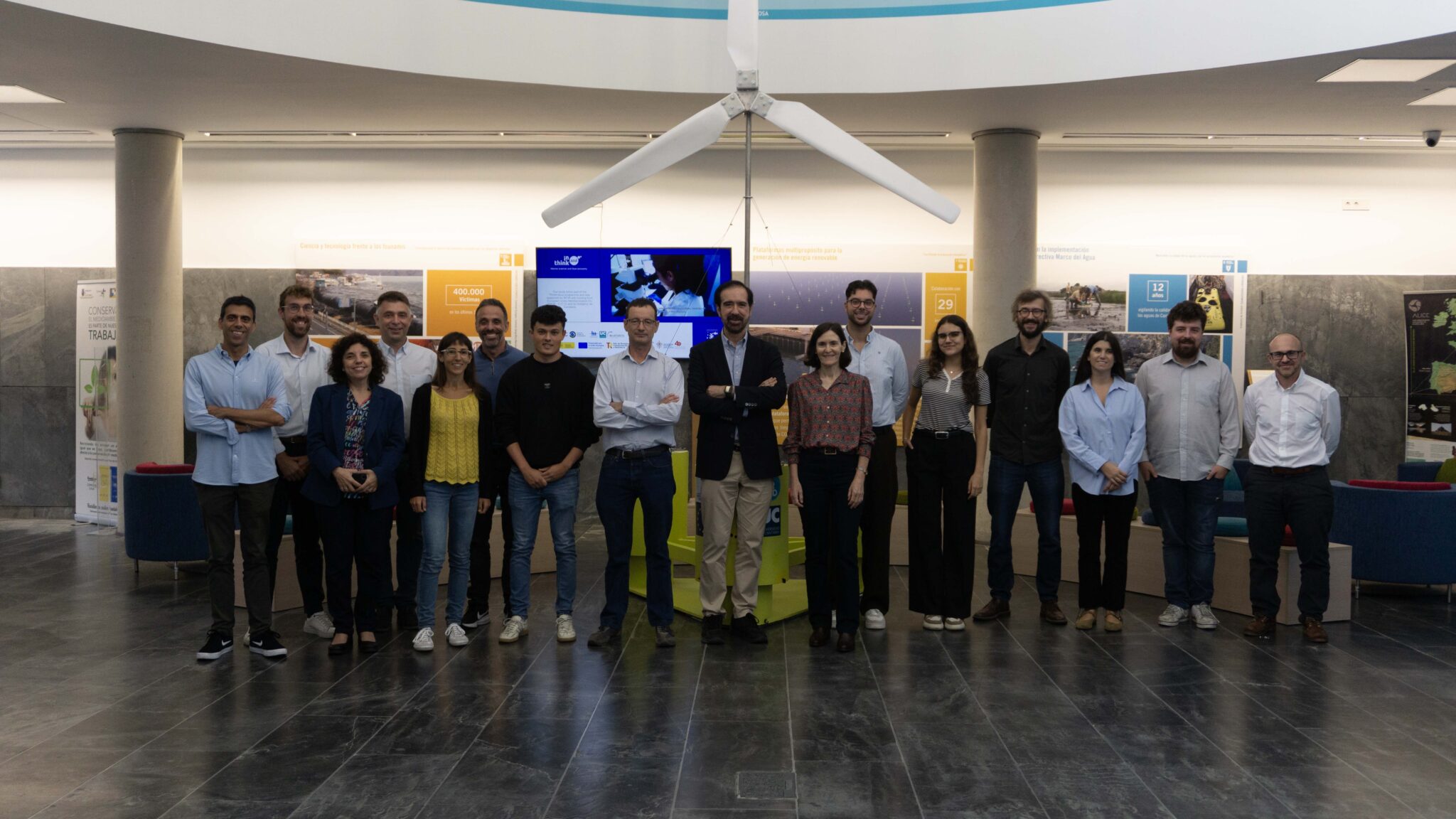
The final meeting and specialized training session for the CLIMPORT project at the IHCantabria facilities
As the project reaches its final stages, the CLIMPORT consortium meets at the IHCantabria facilities to complete a course focused on the practical use of the software designed
After three years of research, development, and innovation, the project “Modeling System for the Design and Construction of Climate-Resilient Port Infrastructure” (CLIMPORT), co-funded by the Ministry of Science, Innovation, and Universities as part of the 2022 Call for Public-Private Partnership Projects. The CLIMPORT consortium, led by FCC Construction , and composed of IHCantabria, DREDGING, ROVER Maritime, ACCIONA Engineering, Sener and PROES Consultants (Amper Group) It organized the closing meeting for this initiative at the Environmental Hydraulics Institute of the Universidad de Cantabria (IHCantabria), where a day of specialized training and workshops was held for technicians and specialists from the consortium’s member organizations.
The goal of this hands-on training session was to ensure the proper transfer of the knowledge and tools developed during the CLIMPORT project. Participants put the developed system into practice—an innovative tool that integrates databases, design methodologies, mathematical, numerical, and statistical tools, and advanced construction procedures to facilitate decision-making in the design and construction of port infrastructure resilient to the challenges of climate change.
At the final meeting of the CLIMPORT project, the consortium took stock of the main results achieved and worked on defining the technology transfer strategy and the potential practical applications of the results of this public-private partnership.
Design of a Unique System
The main outcome of CLIMPORT is the development of a unique, modular system designed to support the design and construction of ports from an innovative perspective. This system brings together, on a single platform, climate databases, technical regulations, international recommendations, and state-of-the-art construction procedures for the analysis and prediction of maritime weather conditions.
This approach makes it possible to address all phases of a port’s life cycle in a comprehensive manner, incorporating historical data, operational forecasting capabilities, and climate change projections, as well as different spatial scales of analysis at the global, regional, local, and detailed levels.
The CLIMPORT system stands out in particular because it explicitly incorporates risk analysis in ports, including both risks associated with climate change affecting port infrastructure and risk analysis during the construction phases of such infrastructure. These capabilities provide more precise tools for anticipating threats, reducing risks, and improving the planning and execution of maritime construction projects in a context marked by increasing climate variability and the construction of ports under increasingly severe climate scenarios.
The methodologies and tools developed represent a significant technological advance for the sector, facilitating the development of ports that are more resilient to future conditions and strengthening the international standing of Spanish companies and organizations operating in the highly specialized field of port engineering.
CLIMPORT’s findings have also received the support and interest of Puertos del Estado and will be presented to the sector’s technical and professional community during the upcoming 10th National Congress of the Technical Association of Ports and Coasts (ATPYC), to be held October 6–8, 2026.
For more information about the project and its results: CLIMPORT | Effects of Climate Change on the Design and Construction of Port Infrastructure

Specialized training for technicians and specialists of the organizations within the CLIMPORT consortium