
The integration of floating wind power and aquaculture in Spanish waters: a strategic path supported by IHCantabria
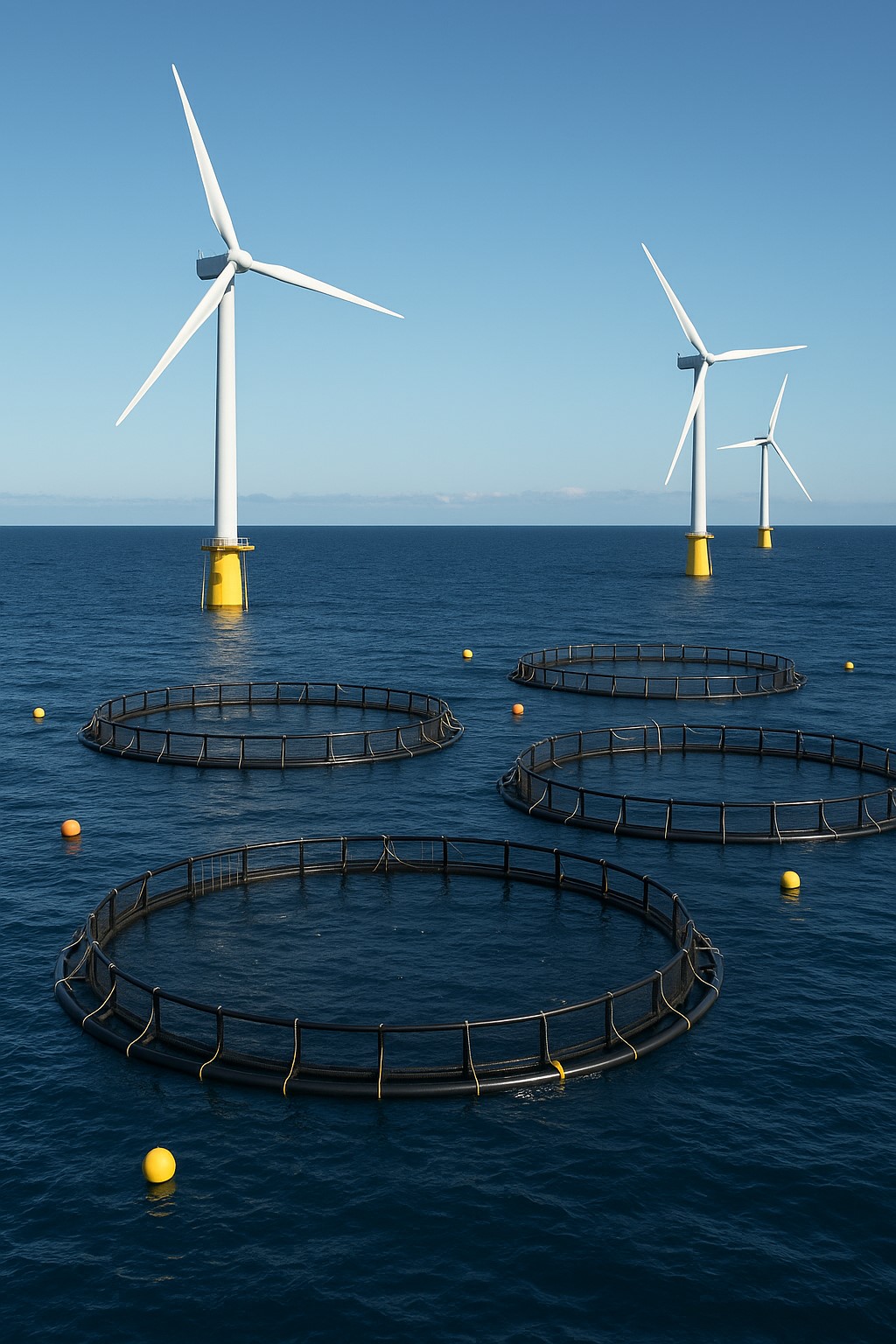
Emerging blue economy industries (such as floating wind energy and offshore aquaculture) have a high potential for development in Spanish waters, according to the results of the study developed by IHCantabria researchers
A study published in “Marine Policy” assesses the potential for joint development of wind energy and aquaculture, and makes recommendations for overcoming technical, regulatory and planning barriers
Results of a study developed by researchers from the Environmental Hydraulics Institute of the Universidad de Cantabria (IHCantabria) propose a strategic framework to promote the shared use of marine space, combining floating offshore wind and aquaculture.
This study offers a national perspective on the opportunities and challenges of this sectoral integration in the Spanish Exclusive Economic Zone (EEZ). Its results were recently published in the journal Marine Policy, in a scientific article written by Carlos V.C. Weiss, Bárbara Ondiviela, Elvira Ramos, Lucía Meneses, Raúl Guanche and José A. Juanes, who are part of the research staff of IHCantabria. This work is part of the ACUFLOT project, supported by the Biodiversity Foundation of the Spanish Ministry of Ecological Transition and Demographic Challenge and IHCantabria.
Technical analysis and sectoral perception point to the potential of joint use in the Spanish Sea
The study presents a three-stage evaluation framework – technical analysis, consultation with the sectors involved and SWOT (Strengths, Weaknesses, Opportunities, Threats and Opportunities) analysis – to guide the formulation of public policies. The results show that there is a high technical potential for developing multi-use projects in the Spanish EEZ, differentiating between high-energy areas in open seas, more suitable for floating wind power, and more sheltered or protected areas, favorable for aquaculture.
Consultation with representatives of the energy and aquaculture sectors revealed a significant interest in moving towards a shared-use model, especially valuing operational and economic synergies.
Regulatory challenges and recommendations for the future
Despite the sectoral interest and technical potential identified, the study highlights the existence of structural obstacles that hinder the implementation of joint initiatives. These include regulatory fragmentation, the lack of specifically designated multi-use zones in national marine planning, and uncertainties surrounding environmental impact.
Faced with these challenges, the research team proposes to move towards the implementation of pilot projects to test the real feasibility of these initiatives in the most promising areas from the technical point of view. It also proposes the need to expressly incorporate multi-use zones in Spain’s maritime spatial plans (POEM), following international benchmarks. To this end, the development of specific regulatory frameworks that streamline administrative procedures and promote cooperation between sectors will be key. The importance of further research on potential socio-environmental impacts and actual operating conditions is also highlighted, in order to reduce existing uncertainties and provide a solid basis for decision making.
A science-based contribution to sustainable marine planning
This study is part of the efforts to promote a more efficient and sustainable blue economy. Its comprehensive approach, which combines technical criteria with the perception of the sectors involved, provides a useful tool for planners, policy makers and companies in the marine sector.
With the publication of the results of this study, IHCantabria reinforces its commitment to applied research for the integrated management of marine spaces, contributing to the development of innovative solutions to the challenges of climate change, energy transition and food sovereignty in oceanic environments.
The full content of the article published in Marine Policy magazine is available at the following link: https://doi.org/10.1016/j.marpol.2025.106786