IHCantabria will host the Technical Conference ‘Offshore wind, hydrogen and ports: a winning combination’
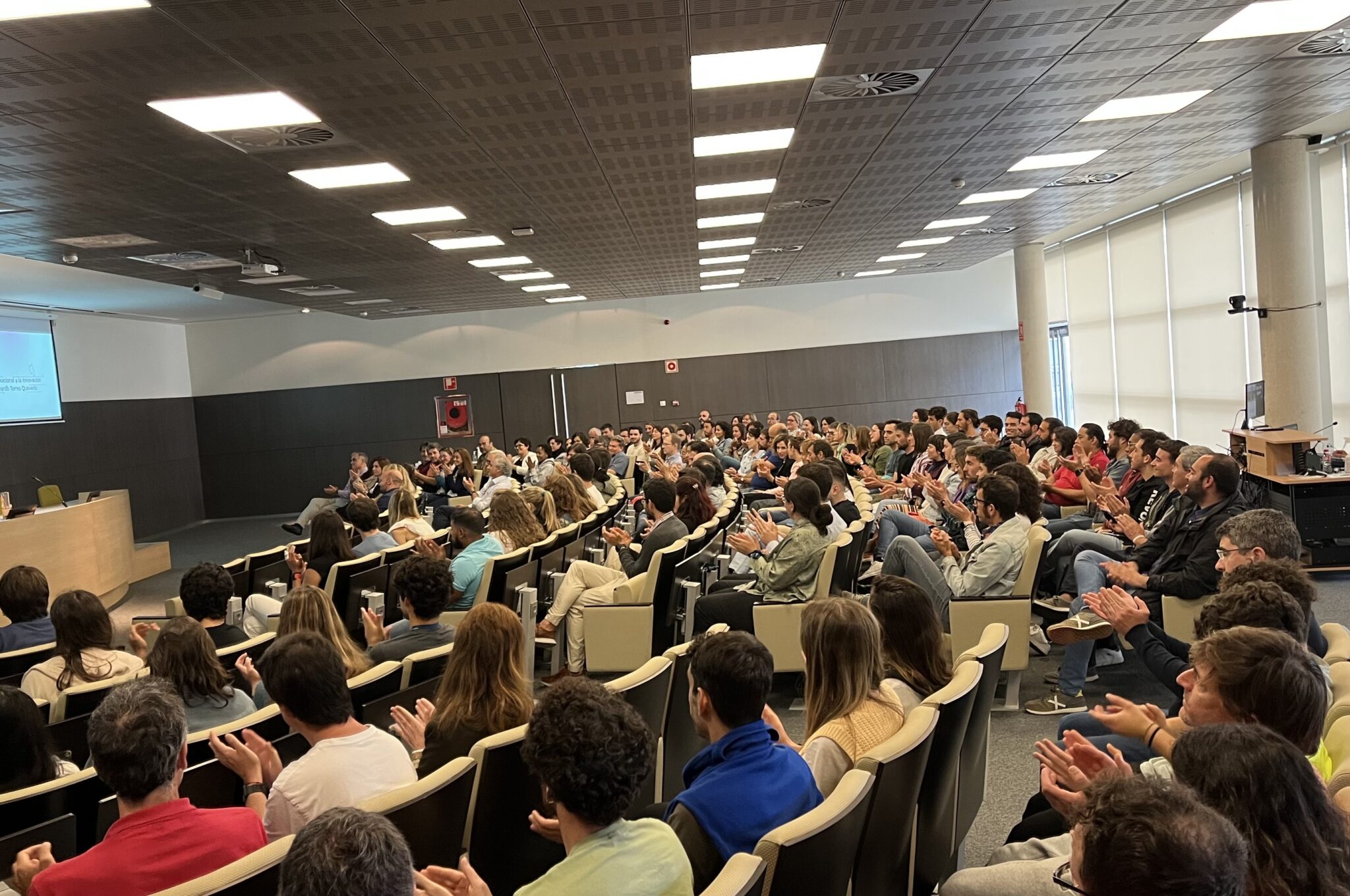
Photo of the IHCantabria Auditorium, during an event previously held at these facilities
This event will bring together in this institute more than 40 speakers, including representatives from Navantia Seanergies, Plenitude Iberia, Ocean Winds, Windwaves, Tresca Ingeniería and Saitec Offshore
The Environmental Hydraulics Institute of the Universidad de Cantabria (IHCantabria) will be the venue for the Technical Conference “Offshore wind, hydrogen and ports: a winning combination“, to be held on October 1 and 2, in Santander. This meeting will bring together more than forty leading experts in renewable energy, ports and maritime industry to analyze the technological, logistical and regulatory challenges that will mark the integration of offshore wind with the production and distribution of hydrogen and other clean fuels.
Organized by the Sea of Innovation Cantabria Cluster (SICC), these conferences will bring together large national companies – such as Navantia Seanergies, Plenitude Iberia, Ocean Winds, Tresca Ingeniería and Saitec Offshore Technologies –together with the Cantabrian business network, regulatory institutions and research centers. The objective: to activate industrial synergies and open new opportunities within the framework of the energy transition in the Cantabrian coast.
Offshore wind and hydrogen: two strategic vectors
The first day will be dedicated to floating offshore wind, with discussions on the deployment schedule, the regulatory framework, the degree of technological maturity and the role of ports as industrial and logistics nodes. On the second day, the focus will be on renewable hydrogen and port decarbonization, including the analysis of alternatives such as ammonia or e-methane production and the creation of energy hubs in port facilities.
Francisco Royano, Director of Technology Transfer at IHCantabria, underlines the relevance of this debate: “Offshore wind energy is at a key moment for its development, at a technical and regulatory level. The transformation of electricity from offshore wind farms into green hydrogen, as marine fuel, is an opportunity for decarbonization of the naval sector, and also for the port environment”.
A space for collaboration and innovation
This conference will be attended by more than forty participants, including speakers and moderators from all over Spain. The presence of profiles such as Carla Chawla (Navantia Seanergies), Sergio Kawecki (Windwaves), Fátima Vellisco (Ocean Winds), Javier Arboleda (SHYNE), Pedro Mayorga (Enerocean) or David Carrascosa (Saitec Offshore) and representatives of the regulatory field with responsibilities in the definition of the framework for offshore wind and hydrogen as Marta Gómez Palenque, Managing Director of Quality and Environmental Assessment of the Ministry for Ecological Transition and the Demographic Challenge.
In addition to the conferences, there will be Business Connection Spaces, designed to promote direct meetings between national and local companies, in order to generate partnerships and position capabilities in the offshore wind and hydrogen value chain.
IHCantabria, an international benchmark in research applied to the marine and coastal environment, reinforces with this event its commitment to the development of scientific and technological solutions that accompany the transition to a more sustainable and resilient energy model.
Registration is open on the event’s website, offshorecantabria.es, where you can consult the program and the options for participation as a sponsoring company to have a business connection room.

In addition to the technical sessions, those attending the conference will be able to visit the Great Tank of Maritime Engineering of Cantabria (GTIM/CCOB). This is a unique scientific and technical infrastructure (ICTS) highly recognized in hydraulic engineering; it has advanced equipment, such as generators of waves and multidirectional currents, and specialized channels for the study of waves, currents and tsunamis. Tests of offshore technologies are carried out here