IHCantabria starts training program for climate change adaptation in the Spanish port system
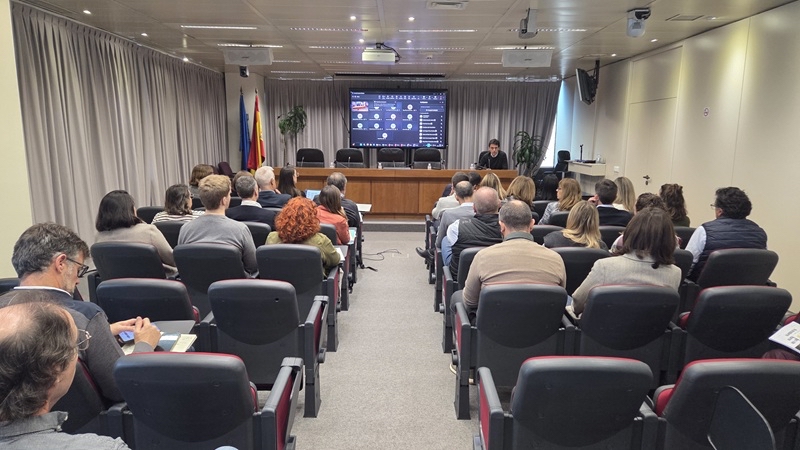
November 27, Madrid, first training session on climate change adaptation in the Spanish port system
IHCantabria reinforces its role as a national reference in the study and management of climate risk, making a decisive contribution to the resilience of the Spanish port system to the effects of climate change.
The Environmental Hydraulics Institute of the Universidad de Cantabria (IHCantabria) inaugurates in Madrid the first session of the training cycle on Climate Risks and Adaptation to Climate Change in the Spanish port system. The program is aimed at the Working Group on Adaptation to Climate Change of Port Authorities (AAPP) formed within the framework of the project in which IHCantabria and Puertos del Estado collaborate with the aim of creating a new tool for assessing climate risks in the Spanish Port System. The group of participants, made up of representatives of all the Port Authorities, has as its main mission the review and validation of the methodologies developed, as well as the operational coordination with the ports during the development of the project.
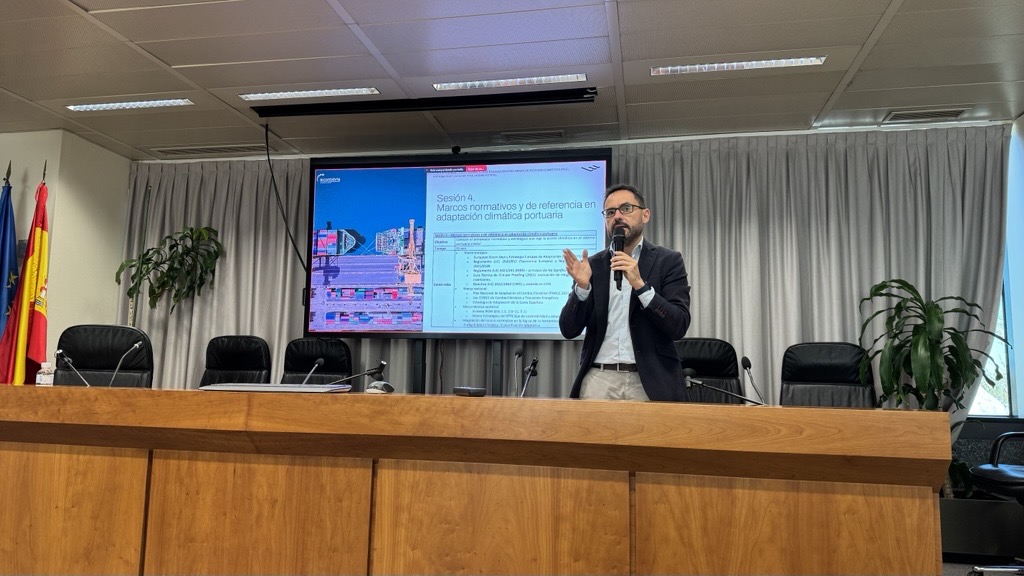
The inaugural session began with a general introduction to the project and a review of the work plan, including the structure of the training program that will be delivered throughout its development. The multidisciplinary team of IHCantabria formed by Javier López Lara, head of the Climate Risk, Adaptation and Resilience Group of IHCantabria, together with María Fuentes Álvarez de Eulate and Yailín Fernández González, consultants of the same group, presented the basics of climate risk analysis according to the IPCC, addressing risk as a combination of hazard, exposure and vulnerability, the role of climate scenarios and the importance of uncertainty in decision making.
Subsequently, the second session focused on the adaptation of the conceptual framework to the port context, presenting the multilevel approach (N1-N2-N3) proposed in the project, the concept of Operational Unit (OU) as a basic element of analysis and the specific characterization of the components of risk in port infrastructures and operations.
In the third session, IHCantabria addressed the concept of adaptation to climate change, its main typologies (structural, nature-based, hybrid and non-structural) and real examples applied in ports. Finally, the European, national and sectoral regulatory framework governing port climate action was reviewed, including, among others, the European Taxonomy, the PNACC and the ROM program, and highlighting its consistency and integration into the project methodology.
IHCantabria and the representatives of Puertos del Estado dedicated the second technical day to the presentation of the pilot ports, which will be the scenarios for the development of the high resolution risk analysis (N3), which will act as a demonstration case of the methodology. The selected ports are: Aviles, Barcelona, Langosteira and Santa Cruz de Tenerife, which have been selected based on their geographical location, typology and morphology. During the session, the IHCantabria team detailed the scope of the N3 analysis, resolved technical doubts and presented the work planning foreseen for the coming months, with the aim of ensuring effective coordination between all the agents involved.
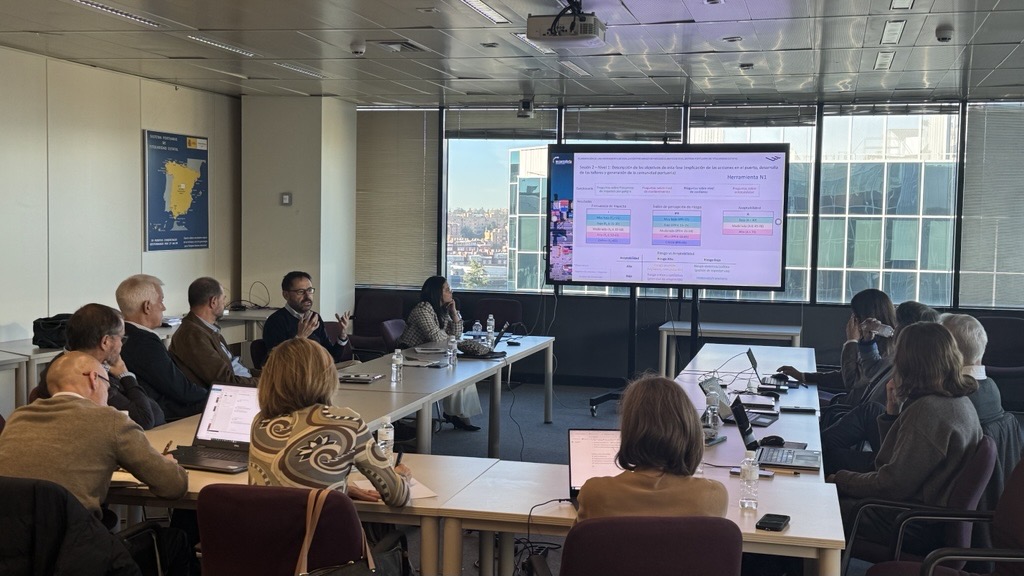
Presentation of the selected ports, which will be the scenarios for the development of the high-resolution risk analysis