NEWS
IHCantabria renews its continuing education offer through UC Microcredentials
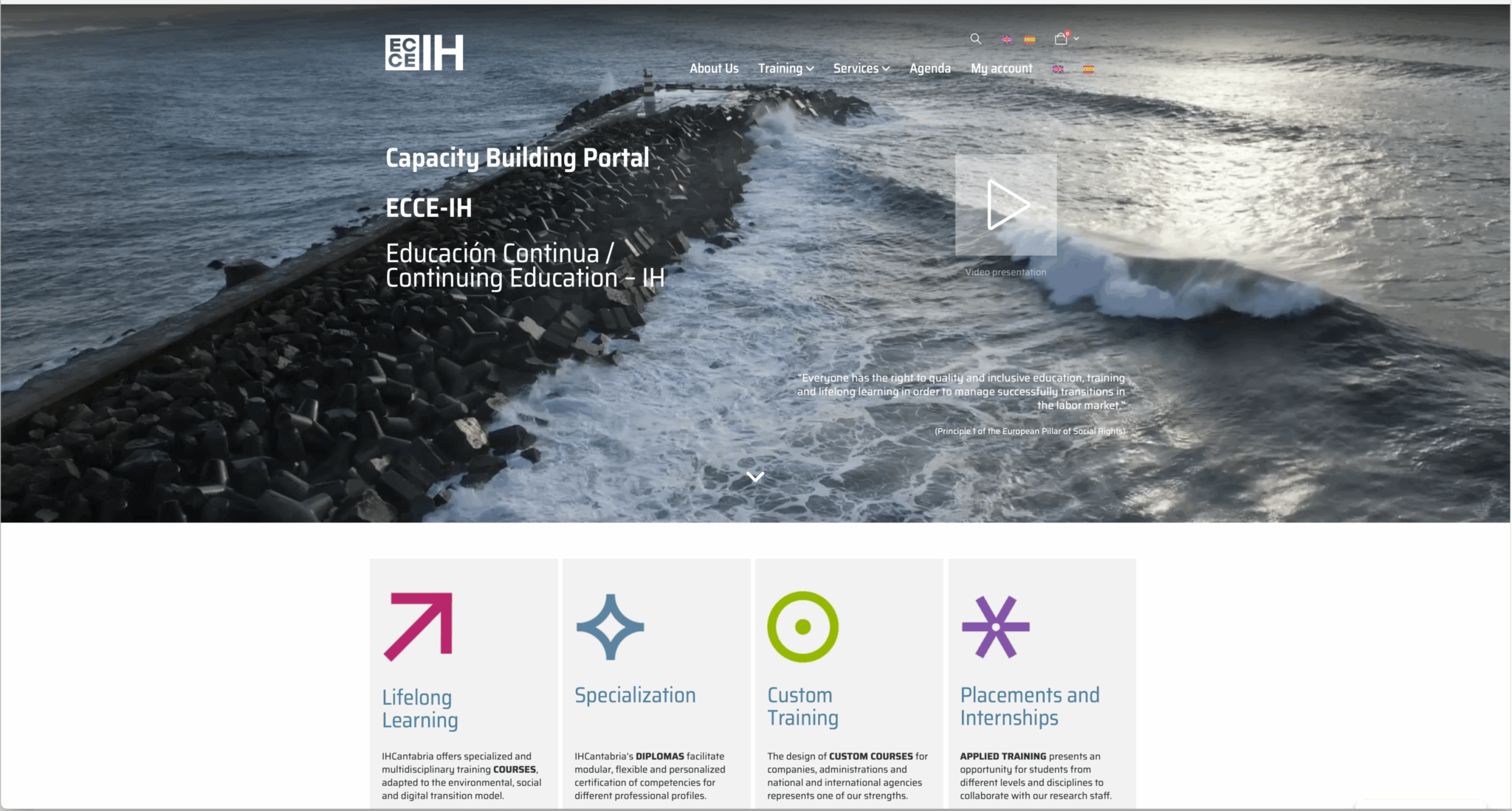
ECCE-IH Portal quality education and continuous training
IHCantabria’s training offer for the first quarter of the 25/26 academic year is included in the Microcredential Program of the Open Academy of Banco de Santander, which finances a minimum of 15 scholarships to study each of the programmed degrees from the ECCE-IH Portal: TRASMARES, ADAPTABLUES and ROM 5.1.
The Environmental Hydraulics Institute of the Universidad de Cantabria (IHCantabria) reinforces its commitment to quality education and continuous training. ECCE-IHrenewing and expanding its offer of University Micro-credentials of the University of Cantabria (UC), an official accreditation that provides added value, both in the academic and professional fields. Last academic year’s training offer, with the degrees on Sustainable Coastal Ecosystems TRASMARES and on Adaptation to Climate Change through the management and restoration of estuarine ecosystems ADAPTABLUESThe first quarter of the 2025/26 academic year will be completed with a new course on the quality of port waters based on the concept of ROM 5.1.
Students who have taken part or all of the theoretical contents of these micro-credentials, in previous editions of the different IHCantabria training offers, may apply for the recognition of the accreditations obtained. However, in order to access the Banco de Santander scholarships, applicants must first register on the Open Academy platform before October 28th. Subsequently, they must pre-register through the web page of the UC WEBSITE
The new programmed degree ROM 5.1 was part of the MOOCs offered by the University of Cantabria from 2013 to 2020. In its 8 editions, more than 9000 students from different countries registered in that course, of which about 2000 obtained the accredited diploma. Coinciding with the 20th anniversary of the publication of the ROM 5.1 Recommendation, an updated version of this course is launched, in this case accredited by the University of Cantabria as a University Micro-credential.
This training itinerary (3 ECTS) consists of a single course in asynchronous format, whose contents, of an eminently practical nature, are integrated into 3 thematic blocks, focused on: the conceptualization of what is understood by Aquatic Port Management; the theoretical and practical development of the four development programs of ROM 5.1; and, the approach to new challenges, problems and solutions associated with the quality of port waters, applying the DPSIR model.
For its part, the TRASMARES University Micro-credential (2nd edition) is a training program originally associated with the European Erasmus+ TRASMARES project, whose objective is to develop specific competencies in the field of marine ecosystem sustainability through a multidisciplinary, practical and integrated approach.
The training itinerary (10 ECTS) consists of four courses in asynchronous format, which are completed with the development of a Final Program Work supervised by a researcher of the Institute. These courses will provide specialized knowledge on: Different methodologies to characterize the distribution of coastal ecosystems; Diagnostic models of the problems and possible solutions associated with these ecosystems; Trends and examples in the use of ecosystems as solutions to different problems recorded in coastal areas; and Methodological approaches to the management and planning of the coastal environment, in its broadest sense.
Finally, the second edition of the ADAPTABLUES University Micro-credential “Adaptation to Climate Change through the management and restoration of estuarine ecosystems” is a training itinerary created within the framework of the European LIFE ADAPTABLUES project, which allows the development of the professional skills and competences necessary to address the assessment and management of risks to climate change in estuarine areas, from a multidisciplinary perspective.
The training itinerary (8 ECTS) consists of three courses in asynchronous format, complemented by a Final Program Work. These courses will provide specialized knowledge on: The characterization and quantification of the services provided by estuaries and estuarine ecosystems related to climate change; The assessment of the risk associated with climate change in coastal areas; and the adaptation strategies available to combat the consequences of climate change.
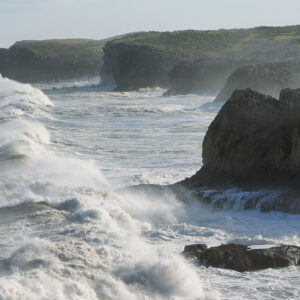


The 3 IHCantabria’s own titles programmed from the ECCE-IH Portal: TRASMARES, ADAPTABLUES and ROM 5.1.