
IHCantabria presents progress and challenges of ISOBARA project to lead the decarbonization of the European energy mix
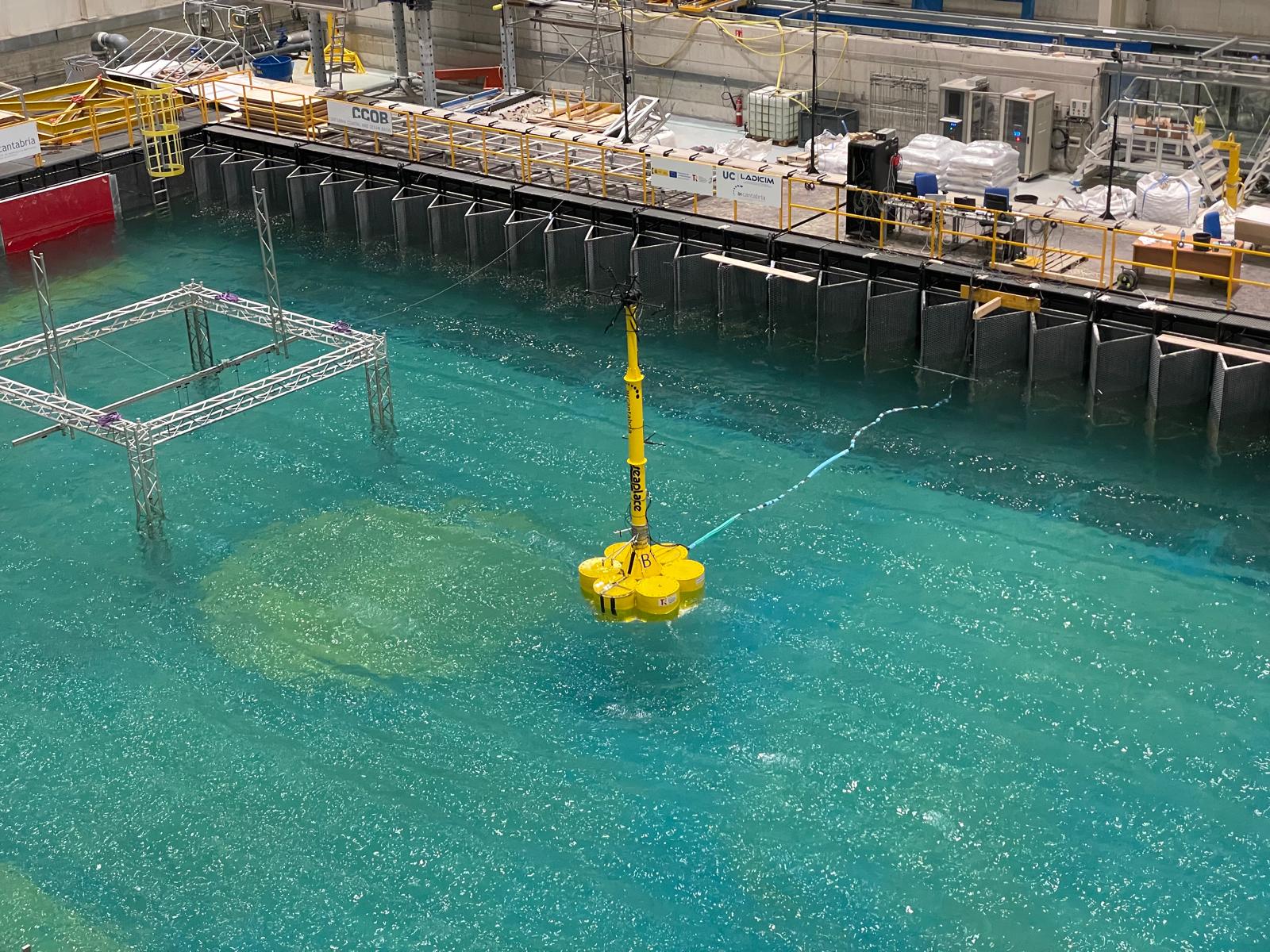
ISOBARA thus contributes to accelerating the deployment of deepwater floating wind turbines
Consortium ISOBARA analyzes progress in the development of a floating concrete wind platform that stands out for its potential to lead the decarbonization of the energy mix, its standardization and competitiveness in the global market.
The ISOBARA project has been a driving force for the development of a new generation of floating concrete platforms for offshore wind energy, designed to be standardizable, durable and cost-competitive. The initiative has combined advanced modeling, materials testing and analysis of the dynamic behavior of the floating system. Its focus has been on optimizing the interaction between turbine, tower, platform and mooring, ensuring safe performance in different sea climates. The use of concrete improves durability, facilitates local fabrication and reduces logistics costs. Thanks to the collaboration between research centers and companies in the offshore sector, the project has achieved significant advances in design and validation. ISOBARA thus contributes to accelerating the deployment of floating wind turbines in deep waters, while reinforcing the European strategy of decarbonization and the expansion of renewable energies in the marine environment.
During its execution, and until its completion in the near future, the main milestones achieved have been shared among its participants, including the improvement of the platform’s design, the validation of its structural and dynamic behavior, and the advances in the use of concrete applied to offshore environments. The collaboration between the different partners has allowed to deepen aspects such as durability, manufacturability and the technical and economic feasibility of the concept, providing a solid basis for its future implementation.
The ISOBARA Consortium is composed of the Environmental Hydraulics Institute of the Universidad de Cantabria (IHCantabria), the Universidad de Cantabria, Seaplace and LADICIM, and aims to develop a floating structure for offshore wind that is applicable in moderate and extreme offshore climates. The standardization of a technology that can be built in series for installation in different ocean locations is also planned.
The overall objective of the ISOBARA project is the reconceptualization and standardization of an advanced concrete floating platform concept, to enhance the competitive development of floating wind farms that are equipped with high power wind turbines (+15MW), applicable in moderate and extreme climates, at shallow and deep depths. To this effect, the research team of this project is developing a portfolio of solutions with the same structural typology and innovative mooring systems, as well as disruptive systems and strategies for the mitigation of non-linear and impulsive loads on the structure. This has resulted in a range of optimal designs that are compatible with the climatic and morphological variability of the different ocean basins on which the ISOBARA project is focused.
The goal is to create a platform that is competitive in terms of construction costs and with optimum performance throughout its useful life. To this end, the development of this project employs experimental and numerical techniques that are unique in the Spanish scientific ecosystem, which allows the generation of synergies with innovative companies, such as Seaplace.
Projection and future challenges
The European Commission estimates that between 240 and 450 GW of offshore wind energy will be needed by 2050, and projects such as ISOBARA are crucial to achieving these goals. Because this project not only seeks to reduce the costs of floating wind farms, but also to contribute to the EU’s priority strategies in the fight against climate change.
The ISOBARA project received funding from the European Union Next GenerationEU/PRTR/Ministry of Science, Innovation and Universities/State Research Agency, and is part of the State Program to Promote Scientific-Technical Research and its Transfer.
For more information, visit the following website: https://isobara.ihcantabria.com.