IHCantabria will lead the Eco-Rok project to strengthen the response capacity to the Asian algae invasion
The Eco-Rok initiative ranked sixth among the 64 projects submitted nationwide, and it will foster collaboration among research centers, industry, government agencies, businesses, and civil society.
The Institute of Environmental Hydraulics at the University of Cantabria (IHCantabria) will coordinate the Eco-Rok project, an initiative funded by the Center for Technological Development and Innovation (CDTI) of the Ministry of Science, Innovation, and Universities, whose goal is to accelerate the transfer of knowledge and technology to sectors affected by the spread of the invasive macroalga Rugulopteryx okamurae. This project will bring together organizations from Andalusia, Cantabria, Galicia, the Balearic Islands, the Region of Murcia, and the Valencian Community to promote innovative solutions and generate new opportunities for economic development linked to the marine environment.
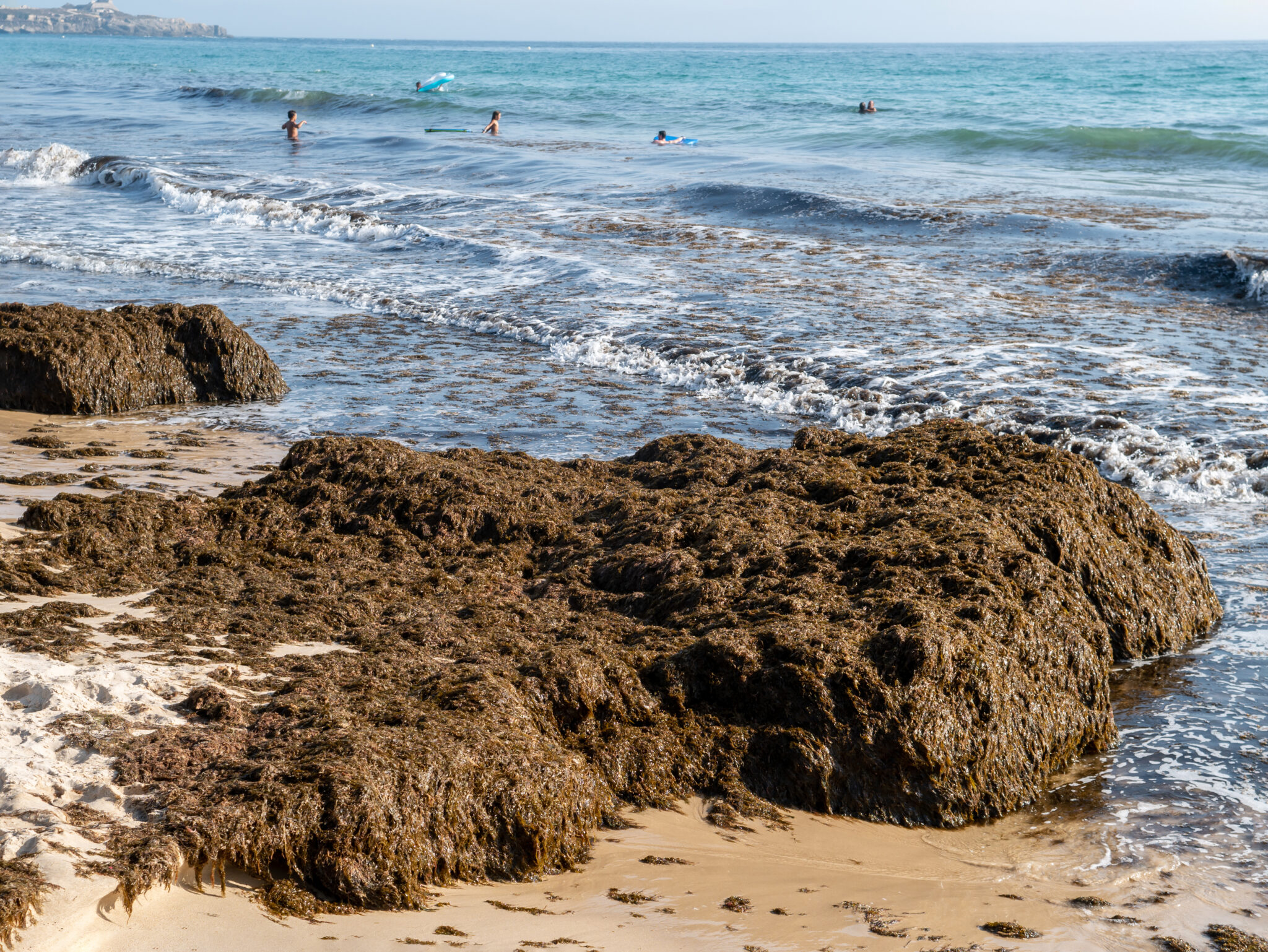
Rugulopteryx okamurae is a species native to Southeast Asia, whose rapid spread is causing environmental, economic, and social impacts, harming biodiversity, fishing activities, and tourism. Present in numerous Spanish coastal areas since 2015, it has spread to the Cantabrian coast over the past two years, recently appearing on beaches in Cantabria and elsewhere in the Basque Country.
As an ecosystem, Eco-Rok will address the challenges associated with the spread of this algae through a comprehensive approach, combining scientific research, technological innovation, public management, and participation from the private sector. One of the project’s objectives will be to develop regional assessments and a comparative analysis at the supraregional level, which will make it possible to identify particularly vulnerable areas, detect common needs, and find technological solutions to the problems caused by the algae.
Among the expected outcomes of Eco-Rok are the development of regional roadmaps, a prioritized catalog of collaborative projects and pilot demonstrations, and an Open Innovation program. A network of regional Living Labs—or real-world testing zones—will also be created, where tools for the early detection of invasive species, their environmental monitoring, predictive modeling, and management will be designed, tested, and validated. In addition, a data integration protocol will be defined to facilitate interoperability between systems and contribute to the development of a future shared Marine Data Space.
As a key complement, plans are in place to develop a technical training program on invasive species that promotes the transfer of knowledge among institutions, professionals, authorities, fishing guilds, and companies. Likewise, a specific training module on technology transfer will be incorporated into the University of Cádiz’s Microcredential program, “Transforming Science into Impact,” which specializes in the commercial technology transfer of R&D&I projects related to the Blue Economy.
The Eco-Rok Consortium: IHCantabria (coordinator), CEIMAR Foundation – Campus of International Excellence for the Sea (Andalusia), OPP72 – Conil Fish Market Artisanal Fishermen’s Organization (Andalusia), Catholic University of Valencia, Mare Nostrum Campus (Region of Murcia), Marilles Foundation (Balearic Islands). Collaborators: University of A Coruña (UDC) and the Mediterranean Institute for Advanced Studies (IMEDEA, CSIC-UIB).